
Managing water in a high-rise building is significantly more complex than in a standard commercial property.
Multiple risers, pressure zones, booster pumps, plant rooms, communal facilities and long runs of concealed pipework create an extensive network in which even a relatively small leak can cause widespread damage.
A leak originating from an apartment or commercial unit on an upper floor may pass through several properties before it becomes visible. Identifying the source can then require access to occupied units, investigation behind walls and ceilings, and the temporary shutdown of parts of the building.
For facilities managers, effective water management is therefore about far more than maintaining supply. It involves protecting occupants, controlling operational costs, reducing water waste, limiting disruption and demonstrating that the building’s water risks are being managed proactively.
Traditional approaches based on manual meter readings, routine inspections and reports from occupants often identify a problem only after damage has already occurred.
Smart water monitoring and automated leak prevention allow building operators to detect unusual water behaviour earlier, locate the affected area more quickly and intervene before a minor issue develops into a major incident.
Why High-Rise Buildings Face Greater Water Risks
High-rise developments contain complex water-distribution systems designed to maintain suitable flow and pressure across numerous floors.
These systems may include:
Multiple pressure zones
Vertical risers and branch connections
Booster pumps and storage tanks
Landlord and tenant water supplies
Plant rooms and communal facilities
Concealed pipework within walls, ceilings and service voids
Apartments or units with intermittent occupancy
The scale and layout of these systems create several practical challenges.
Hidden leaks may continue for days or weeks without producing an obvious visible sign. A small continuous leak can waste a substantial volume of water, while a sudden pipe failure can affect several floors in a short period.
Manual inspections are also limited. They provide only a snapshot of building conditions and may not identify irregular usage between inspections. Access to occupied apartments, offices or commercial units can further delay investigation and repair.
In a high-rise building, waiting for water damage to become visible is rarely an effective risk-management strategy.
The Cost of Escape of Water
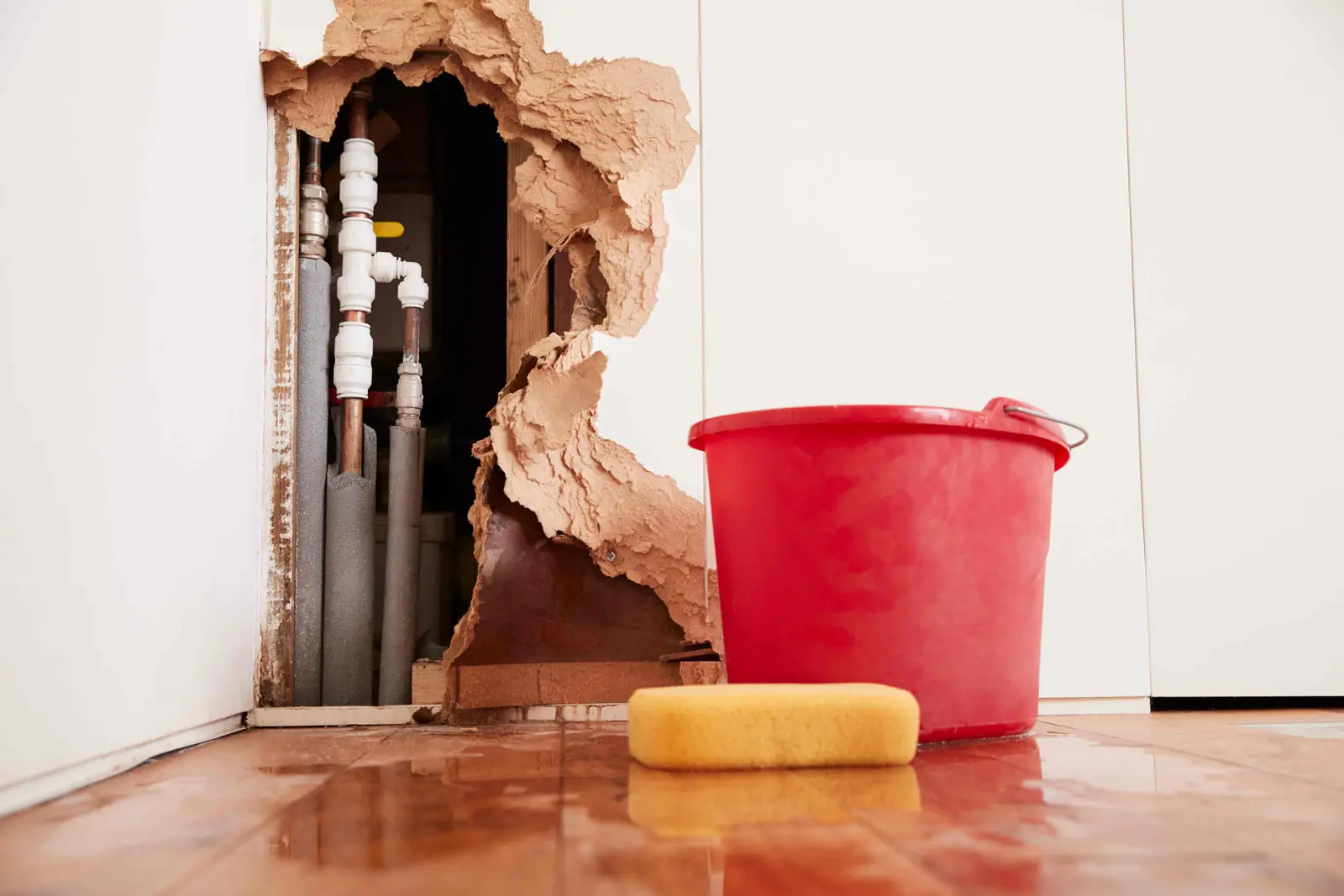
Escape of water remains one of the most common and costly causes of property damage.
According to the Association of British Insurers, insurers pay approximately £1.8 million each day for domestic escape-of-water damage.
The cost of an incident can extend far beyond repairing the original pipe or fitting. Facilities and property-management teams may also face:
Damage to multiple apartments or commercial units
Business interruption
Resident or tenant complaints
Emergency contractor call-outs
Lift or electrical shutdowns
Temporary relocation costs
Increased scrutiny from insurers
Reputational damage
Where water travels through several floors, the resulting reinstatement costs can significantly exceed the cost of addressing the original fault.
This is why early detection and rapid isolation are particularly important in high-rise environments.
What Is a Smart Water System?
A smart water system combines connected monitoring equipment, building data and automated controls to provide continuous visibility of water use.
Depending on the building and its risk profile, the system may include:
Smart water meters
Pressure monitoring
Leak-detection sensors
Automated shut-off valves
Real-time alerts
Remote monitoring
Historical usage reports
Intelligent anomaly detection
These technologies perform different roles.
Metering records how much water is being used. Leak detection identifies unusual or unwanted water behaviour. Leak prevention goes a step further by enabling the affected supply or zone to be isolated before the incident escalates.
Rather than relying entirely on scheduled inspections, smart systems monitor water behaviour throughout the day and night. Unexpected flow, sustained consumption or unusual changes in usage can trigger an alert for investigation.
Detecting Problems Before Damage Escalates
Many water incidents begin with subtle changes in behaviour rather than an immediate pipe failure.
Examples may include:
Continuous flow during normally inactive periods
An unexpected increase in overnight consumption
Repeated short bursts of unexplained usage
Unusual consumption within an unoccupied apartment
Sustained flow following maintenance work
Water use that differs significantly from the normal pattern for a floor or zone
Continuous monitoring can identify these changes before occupants report visible damage.
Facilities teams can then investigate the relevant apartment, riser or section of the building rather than searching across the entire water network.
This can reduce both the time required to locate the problem and the likelihood of further damage occurring.
Real-Time Visibility Across the Building
A single incoming meter may show that a building is using more water than expected, but it does not necessarily reveal where that water is going.
A more granular monitoring strategy can provide visibility across areas such as:
Individual apartments
Commercial units
Floor-level risers
Landlord supplies
Plant rooms
Communal washrooms
Irrigation systems
Incoming mains supplies
Dividing the building into measurable zones makes abnormal usage easier to identify.
Instead of treating the development as one large water system, facilities managers can compare the performance of different floors, units and operational areas.
This supports faster fault-finding and allows maintenance teams to focus their investigation where it is most likely to be needed.
Automated Isolation Provides an Additional Layer of Protection
Detection alone may not be sufficient where immediate intervention is required.
If a pipe fails overnight, during a weekend or within an unoccupied unit, there may be a significant delay before a member of the facilities team can attend the site.
Automated shut-off valves can isolate the affected supply or section of pipework when predefined conditions are met.
In a high-rise development, a well-designed isolation strategy may allow an individual apartment, floor or riser to be shut down without interrupting the water supply to the entire building.
This limits the volume of water that can escape while reducing disruption to unaffected occupants.
Automated isolation is particularly valuable in areas that are unoccupied for extended periods or where access may not be immediately available.
Reducing Water Waste and Operating Costs
Not every leak results in visible damage.
Slow and continuous leaks from toilets, taps, valves or concealed pipework can continue unnoticed while steadily increasing water bills.
Smart monitoring helps facilities teams identify this background consumption and distinguish it from legitimate building use.
The resulting data can support:
Faster identification of inefficient fixtures
Reduced avoidable water use
Lower utility costs
Verification of repair work
Comparison of usage between floors or zones
More accurate consumption baselines
Better maintenance prioritisation
Rather than relying on assumptions, facilities teams can use measured performance to decide where maintenance resources will have the greatest impact.
Supporting Insurance and Risk Management
Insurers and risk engineers are increasingly interested in how building owners manage escape-of-water exposure.
A structured water-risk strategy may include:
Continuous monitoring
Documented alert procedures
Automated isolation
Regular valve testing
Clear responsibility for responding to alerts
Records of incidents and corrective work
Smart monitoring can provide evidence that the building operator is taking active steps to identify and control water risks.
It should not be viewed as a guarantee of lower insurance premiums. However, it can support discussions with insurers by demonstrating that the building has a preventative approach rather than relying solely on reactive maintenance.
Quensus in Action
Quensus has demonstrated how intelligent monitoring and automated isolation can reduce water risk within complex high-rise developments.
In one residential project, a developer had experienced repeated and costly escape-of-water claims.
Quensus retrofitted a leak-prevention system across two high-rise residential blocks. Flow sensors and motorised isolation valves were installed at apartment level, with additional monitoring around the floor risers to identify leakage within landlord-controlled areas.
The completed system cost approximately half as much as a single major insurance claim.
Following installation, the building gained continuous water monitoring and the ability to isolate affected areas automatically when abnormal flow was detected.
The project demonstrates an important principle: the cost of preventative monitoring can be significantly lower than the financial and operational impact of a major high-rise water incident.
Quensus has also supported residential developments such as Kew Bridge Apartments, where monitoring during commissioning helped identify hidden water issues before they became established operational problems.
Sustainability Benefits Of Leak Prevention
Water efficiency is becoming an increasingly important part of environmental, social and governance strategies.
Smart monitoring provides the measurable data needed to understand how and where water is being consumed.
Organisations can use this information to:
Reduce water consumption
Identify inefficient equipment and fixtures
Measure the results of water-saving interventions
Improve environmental reporting
Support water-management plans
Establish performance baselines
Track progress against sustainability targets
Reducing unnecessary water use may also lower the energy associated with pumping, heating, treating and distributing water.
For organisations pursuing BREEAM or other environmental objectives, accurate monitoring can provide useful evidence of water performance and continuous improvement.
Moving from Reactive Maintenance to Prevention
High-rise buildings are too complex to manage effectively through occasional inspections and occupant reports alone.
Facilities managers need timely information about how water is behaving across the building, where unusual consumption is occurring and whether immediate intervention is required.
Smart water systems provide this visibility by combining continuous monitoring, intelligent alerts, granular reporting and automated isolation.
The result is a more preventative approach to water management that can:
Reduce the likelihood of major water damage
Limit disruption to occupants
Improve maintenance planning
Reduce avoidable water consumption
Support insurance risk-management discussions
Protect valuable building assets
For modern high-rise and mixed-use developments, intelligent water management is no longer simply a technical upgrade. It is becoming an essential part of effective facilities and building-risk management.
Quensus designs smart water-monitoring and leak-prevention systems around the layout, occupancy and risk profile of each building.
Speak to the Quensus team to discuss how continuous monitoring and automated isolation could help protect your high-rise development.