
Oops! Something went wrong while submitting the form.
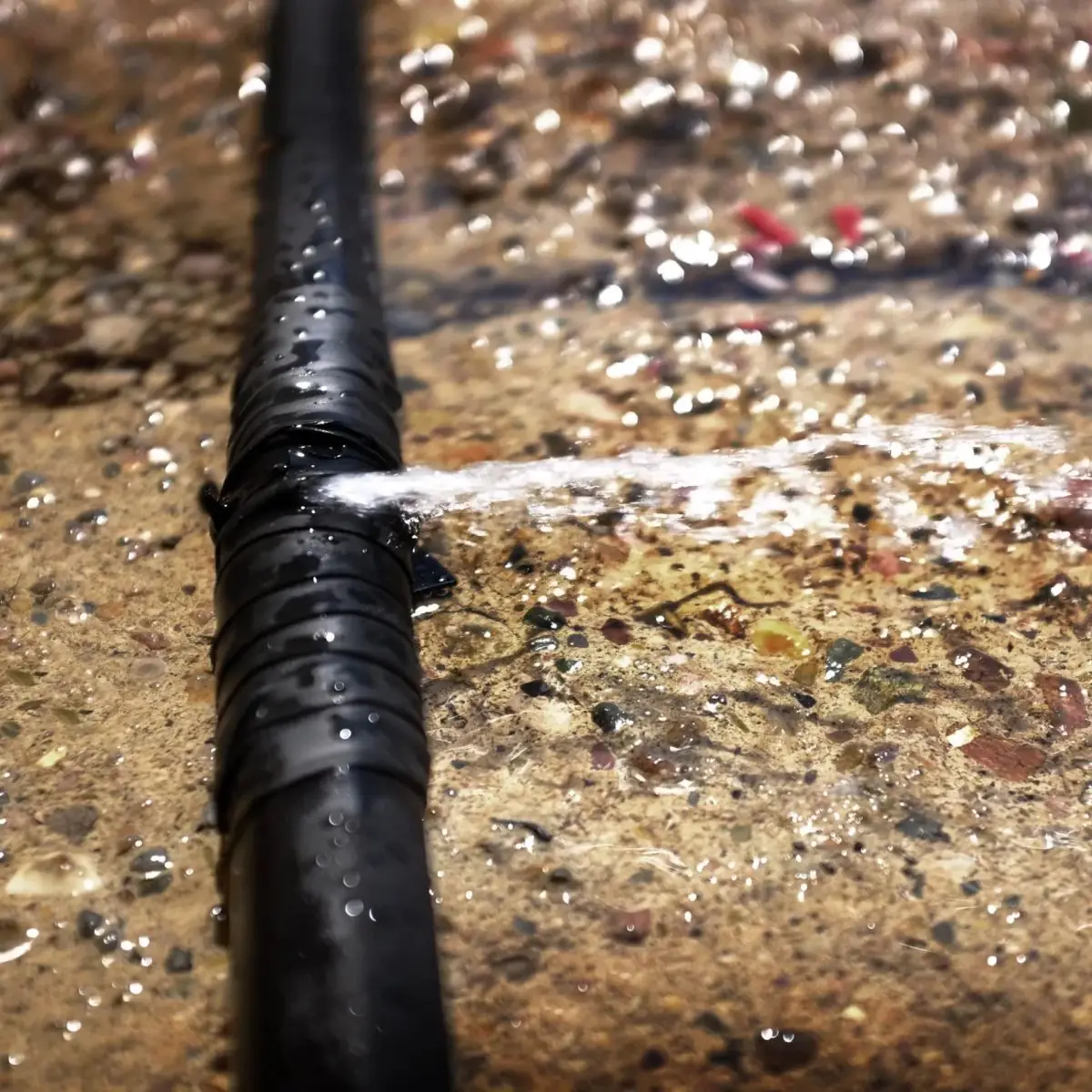
Reduce escape of water risk with continuous leak monitoring. Real-time alerts, automated shut-off, compliance-ready reporting for commercial buildings.
Enquire Today Download The Brochure


Leak monitoring systems provide ongoing, real-time visibility of water usage and leak risk across entire buildings or portfolios. Unlike traditional leak detection - which reacts once water escapes - leak monitoring focuses on continuous oversight, data analysis, and automated prevention, reducing damage, disruption, and insurance exposure before incidents escalate.
For facilities managers, engineers, consultants, and building operators, leak monitoring is no longer optional. It is a critical layer of risk management, compliance, and operational efficiency - especially in complex, high-value, or multi-occupancy environments. Continuous leak monitoring plays a key role in reducing Escape of Water risk, one of the largest causes of property insurance claims.
Quensus delivers this through an integrated approach combining FlowReporter, the intelligent monitoring and analytics platform, with LeakNet, the prevention infrastructure that can automatically isolate water supply where risk is identified. Together they provide both visibility and control across modern buildings.
A leak monitoring system provides continuous insight into how water behaves within a building or estate. Platforms such as FlowReporter track water flow and consumption patterns across defined zones, creating a live operational picture of water usage rather than relying on isolated alarms or reactive inspections.
When combined with prevention infrastructure such as LeakNet, this monitoring capability can translate directly into action, helping contain potential issues before they escalate into costly incidents.
This allows organisations to:
Identify abnormal usage patterns early
Detect small or hidden leaks before damage develops
Monitor risk across multiple floors, tenants, or sites
Automate alerts, reporting, and isolation responses where required
Support compliance, ESG reporting, and insurer requirements
Leak monitoring effectively bridges the gap between detection and prevention. It replaces reactive response with continuous assurance and is often the foundation of a broader leak prevention strategy, enabling automated isolation and proactive risk control.
Water-related incidents remain one of the largest sources of property damage across commercial and residential assets. Rising reinstatement costs, ESG expectations, insurer scrutiny, and increasing building complexity mean passive approaches are no longer sufficient.
Continuous monitoring delivers:
Earlier intervention before damage escalates
Greater operational certainty
Reduced business interruption risk
Improved insurer confidence
Measurable sustainability outcomes
This is why leak monitoring is rapidly becoming standard infrastructure in modern building risk management.
Water systems are divided into logical zones based on layout, function, tenancy, or risk exposure. This allows precise oversight and targeted response rather than blanket monitoring.
Flow and consumption data is collected continuously, establishing a baseline of normal behaviour for each monitored zone.
That baseline is critical for early anomaly detection.
These issues are often missed by traditional detection systems.
Monitoring becomes active risk control rather than passive observation.
Water risk becomes measurable, auditable, and manageable.
Where many providers offer isolated sensors, Quensus delivers a complete monitoring ecosystem built for commercial-scale environments.
LeakNet provides:
Continuous behavioural monitoring rather than simple alarms
Prevention-focused analytics rather than reactive alerts
Data-driven insights supporting operational decision-making
Proven insurer alignment and compliance support
Scalable infrastructure for portfolios and complex buildings
Specialist partner of Aviva
This positions Quensus as a long-term technology partner rather than a reactive service provider.
Leak monitoring represents a fundamental shift in how organisations manage water risk.
Instead of waiting for damage:
Risks are identified earlier
Response becomes structured
Compliance becomes measurable
Operational resilience improves
LeakNet delivers the insight, automation, and assurance required to manage water systems proactively across modern buildings and portfolios.
If you are planning to implement a leak monitoring strategy, Quensus can help design, deploy, and optimise a solution aligned with operational needs, insurer expectations, and compliance objectives.
Every building’s risk profile and budget differ. Unlike one-size-fits-all systems, Quensus engineers a bespoke leak-detection solution around your insurer’s requirements and cost constraints - saving you thousands in wasted water and premiums. There is an unlimited number of options, but we have simplified leak prevention into our four main tiers:
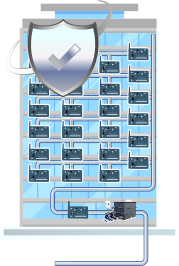

A combination of bronze, silver and gold will provide the most effective leak prevention system available.
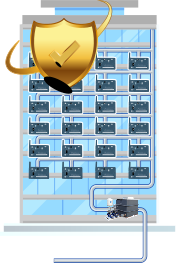
Automatic Flow Monitoring with Smart Shutoff Valves on the boosted supply to each unit/apartment. The most effective solution post-handover over the lifetime of the building.
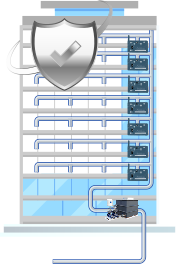

Automatic Flow Monitoring with Smart Shutoff Valves on the boosted supply to each floor (or each riser if plumbing is vertically fed). Ideal during construction because each floor can be isolated individually.
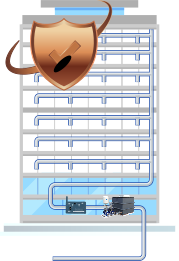

The absolute minimum you should be looking for is Automatic Flow Monitoring on the Mains Cold Water System and Boosted Cold Water System for the whole building. This is covered in the BREEAM WAT03 standard.
Got questions? Ask us!
We’re your H2O Heroes! Choosing the right water management solution can be tricky, but our friendly team is here to help.
We’ve compiled the top FAQs for quick answers - Read FAQ.

A leak monitoring system continuously tracks water flow and usage patterns across a building or portfolio. It provides ongoing visibility into how water behaves so abnormal activity can be identified early, helping prevent damage rather than simply reacting after a leak occurs.
Leak detection typically identifies leaks once water has already escaped or damage is visible. Leak monitoring focuses on continuous oversight, analysing water behaviour to identify risks earlier and support preventative action before incidents escalate.
Water damage remains one of the most frequent and costly property risks. Rising insurance costs, sustainability requirements, increasing building complexity, and operational resilience expectations mean organisations increasingly need proactive monitoring rather than reactive alarms.
Monitoring cannot eliminate risk entirely, but continuous visibility, early anomaly detection, and automated shut-off capability significantly reduce both the likelihood and severity of water incidents.
Common users include facilities managers, property developers, landlords, commercial building operators, construction contractors, insurers, risk consultants, and asset portfolio owners. Any organisation responsible for building infrastructure can benefit.
Yes. Many insurers encourage or require monitoring and automatic shut-off capability, particularly for high-value, multi-occupancy, or construction-phase assets where Escape of Water exposure is higher.
Monitoring provides evidence of active risk management, reduces incident severity, and supplies telemetry data that can improve underwriting confidence, speed up claims handling, and support more stable insurance conditions.
In some cases, demonstrable risk mitigation supports improved underwriting terms or reduced deductibles. Outcomes vary by insurer and risk profile, but proactive monitoring generally strengthens overall risk positioning.
Systems typically combine continuous flow monitoring, zoned infrastructure visibility, behavioural analytics, automated alerts, optional shut-off capability, cloud dashboards, and integration with building systems. This creates a live operational view of water risk.
Yes. Modern systems can connect with Building Management Systems so water monitoring sits alongside HVAC, energy, and life safety data, supporting centralised operational control and smarter building management.
Yes. Systems can be installed in new builds, refurbishments, or retrofitted into occupied buildings. Installation strategy depends on access, infrastructure layout, and operational constraints.
Yes. Continuous monitoring reduces water waste, supports sustainability reporting, aligns with frameworks such as BREEAM water credits, and helps organisations demonstrate responsible resource management.
High-risk environments typically benefit most, including commercial offices, residential developments, healthcare facilities, data centres, hospitality environments, construction projects, and multi-site portfolios.
No. While especially valuable for complex assets, monitoring can be scaled for individual buildings, smaller developments, or large portfolios depending on risk exposure.
LeakNet provides behavioural monitoring, zoned visibility, intelligent analytics, integration with wider building infrastructure, and reporting designed to support operational decision-making, compliance requirements, and insurer engagement.



Sign up for the easiest way to stay in touch.