Oops! Something went wrong while submitting the form.
.jpg)
Prevent water damage in data centres with LeakNet. Real-time monitoring, automated shut-off, and leak prevention to protect uptime.
Enquire Today Download The Brochure


Protect critical infrastructure from water damage with continuous monitoring, automated shut-off, and real-time analytics using solutions such as LeakNet and smart water management systems.
Prevent Downtime - Protect mission-critical infrastructure from water-related failures with automated leak prevention supported by leak monitoring systems.
Gain Visibility - Monitor water usage across cooling systems, plant rooms, and infrastructure with real-time analytics from smart water metering and submetering.
Reduce Risk - Minimise operational risk, prevent costly outages, and maintain uptime through proactive monitoring aligned with NetZero water management solutions.
Data centres operate in high-risk environments where even a minor water leak can have immediate and severe consequences. Unlike other buildings, water ingress can directly impact critical infrastructure, making leak prevention a core operational priority.
Water systems such as cooling infrastructure and pressurised pipework run continuously, increasing the likelihood of both sudden failures and hidden leaks that develop over time.
Key risks include:
Unplanned downtime and loss of service
Damage to critical IT infrastructure
Disruption to operations and SLAs
High repair and remediation costs
Increased insurance and compliance pressure
In many cases, leaks are not immediately visible. Issues within cooling systems or concealed pipework can go undetected until damage has already occurred.
For data centre operators, water risk is not just a maintenance issue - it is a critical business risk. Implementing smart leak detection, water monitoring and leak prevention systems is essential to protect infrastructure and maintain uptime.
Leak prevention replaces reactive detection with continuous monitoring and automated control. Solutions such as LeakNet monitor water flow and consumption in real time, establishing a baseline of normal behaviour across systems.
This enables early identification of:
Continuous or abnormal flow within cooling systems
Abnormal flow patterns indicating faults
Gradual increases in water usage
Hidden leaks within pipework or infrastructure
When anomalies are detected, alerts are triggered and water supply can be automatically isolated where required. This ensures issues are contained before they escalate and supports compliance with BREEAM leak detection standards.
Data centre floors, server halls, and cooling plant areas require broad-area coverage that flow monitoring alone cannot provide. Leak Cable runs across large floor spaces and along pipe routes, detecting moisture at the earliest point of ingress. It complements flow-based LeakNet monitoring and is the primary hardware solution for protecting critical infrastructure zones where water ingress must be caught before it reaches equipment. In plant rooms and around cooling equipment, Splash Sensors add targeted point-of-risk detection alongside broad-area Leak Cable coverage.
Quensus combines LeakNet with intelligent analytics to deliver a complete leak prevention solution for high-risk environments.
By providing real-time visibility and automated control, data centre operators can:
Detect issues before failure occurs
Maintain uptime and operational continuity
Reduce risk across critical infrastructure
Improve efficiency across water systems
This approach aligns with broader smart water management strategies and is supported by insights from Quensus case studies.
Leak prevention significantly reduces the risk of water-related incidents while improving visibility across critical systems.
Key benefits include:
Reduced risk of equipment damage and downtime
Improved operational visibility
Faster response to potential issues
Lower maintenance and operational costs
By identifying issues early and responding automatically, operators can maintain resilience while improving efficiency.

Up to 7 credits for reducing water usage per person per day compared against a baseline performance. For example, use water-saving WCs, tap aerators, low-flow showers, waterless urinals, and greywater/rainwater for recycling non-potable water.
Our expertise in smart water metering and data analytics allows us to monitor and analyse water consumption patterns, providing valuable insights to identify water-saving opportunities and track progress towards reduction targets.
Installing our device on the main meter earns you 4 points.
Sub-metering building areas consuming 10% or more of the building's total water demand, or metering multi-tenant buildings per tenanted area, achieves an additional 2 credits.
Up to 4 credits (each) are available based on the water efficiency of the following assets to reduce overall water consumption in the building:
WAT02 - Water-efficient equipment: toilets
WAT03 - Water-efficient equipment: urinals
WAT04 - Water-efficient equipment: hand washing basins
WAT05 - Water-efficient equipment: showers
WAT06 - Water-efficient equipment: white goods
Our experience in specifying and installing water-efficient fixtures can help building owners select and implement the most appropriate solutions to achieve significant water savings.
Up to 4 credits for installing a robust leak detection system, which plays a vital role in conserving water resources. By promptly identifying and addressing leaks, buildings can significantly reduce water wastage, contributing to a more sustainable water footprint. 1 credit has traditionally been given for a leak detection system that can detect a major water leak on the mains water supply within the building and/or between the building and the utilities water meter.
Our advanced leak detection technology, including smart metering and real-time monitoring, can quickly identify and locate leaks, enabling prompt repairs and minimising water wastage, potentially enabling you to achieve the full 4 credits after a complete calendar year.
Up to 4 credits for proactive measures to prevent leaks. Proper installation and maintenance of flow control devices, whether in sanitary fittings or larger residential complexes, are essential for minimising water loss and ensuring the longevity of plumbing systems.
Our LeakNet system goes beyond traditional leak prevention methods. With AI-powered monitoring, real-time alerts, and automatic shut-off capabilities, LeakNet actively identifies and stops leaks before they cause significant damage or water wastage. This proactive approach aligns perfectly with the BREEAM focus on minimising water loss and ensuring the longevity of plumbing systems.
Up to 4 credits can be awarded depending on the extent and effectiveness of the isolation valve strategy within the building's water supply system, which allows controlled shut-off of specific sections of the water supply, enabling targeted maintenance or repairs without disrupting the entire system. 1 credit has traditionally been given for installing a flow control device to each WC area/facility so that water is only supplied when needed.
Our smart shut-off valves seamlessly integrate into any plumbing system, providing the isolation capabilities necessary for targeted maintenance and repairs.
This not only meets the traditional BREEAM requirement for isolation valves but also enhances it with intelligent control and automation.
By enabling quick and precise shut-off of specific sections, LeakNet minimises disruption and water wastage during maintenance activities, maximising the potential for achieving up to 4 credits.
The automatic shut-off functionality also serves as an innovative flow control device, securing an additional credit for controlling water supply to WC areas.
Up to 4 credits for using alternative water sources and efficient water-using technologies. Rainwater harvesting, greywater recycling, and the use of water-efficient fixtures are examples of strategies that can substantially decrease reliance on mains water supply.
While we don't directly address alternative water sources, LeakNet's ability to dramatically reduce water wastage through automatic shutoff and leak prevention contributes to lowering mains water consumption.
By minimising unnecessary water loss, LeakNet supports the overarching goal of WAT10, contributing to achieving the maximum credits available.
Up to 4 credits for accurate monitoring and reporting of water consumption data, which is fundamental to effective water management. By tracking consumption patterns, building owners and operators can identify areas for improvement and implement targeted water-saving measures. This will include internal sub-meters to monitor the impacts of inefficiencies and leakage and encourage more effective water management.
Our smart metering and data analytics capabilities can provide detailed insights into water consumption patterns, facilitating the identification of inefficiencies and enabling targeted water-saving interventions.
Up to 4 credits for re-using water for non-potable purposes, such as irrigation or toilet flushing, reduces the demand on treated water supplies. This credit promotes innovative solutions for sustainable water sourcing.
Our experience in monitoring water recycling systems, such as greywater and rainwater harvesting solutions, can help track inefficiencies in these systems and maximise the reuse of water to reduce environmental impact.
Up to 4 credits for standardised reporting of water consumption, benchmarking, and comparison across different buildings and portfolios. This transparency encourages continuous improvement in water efficiency and supports informed decision-making.
Obtain 2 credits by using our data management and reporting tools to automate the collection, analysis, and reporting of water consumption data, providing clear and actionable insights to support decision-making.
Earn 1 extra credit when you report on it internally, and another credit if you publish this information in an annual report.
A comprehensive water strategy goes beyond individual measures by establishing a holistic approach to water management. It includes regular maintenance of water systems, water efficiency, water reuse, and leak detection. The strategy should also include a plan for monitoring and reporting water consumption ensuring optimal performance and longevity, as well as promoting awareness and behavioral changes among building occupants to foster a water-conscious culture.
Up to 8 credits are available depending on the comprehensiveness of the water strategy and the inclusion of specific elements such as:
A proactive maintenance policy for installed water systems
Targets for reducing water consumption
A plan for monitoring and reporting water consumption
A plan for engaging building occupants in water conservation efforts
Our holistic approach to water management and expertise in water efficiency, reuse, and leak detection can help building owners develop and implement comprehensive water strategies that achieve long-term sustainability and cost savings.
Every building’s risk profile and budget differ. Unlike one-size-fits-all systems, Quensus engineers a bespoke leak-detection solution around your insurer’s requirements and cost constraints - saving you thousands in wasted water and premiums. There is an unlimited number of options, but we have simplified leak prevention into our four main tiers:
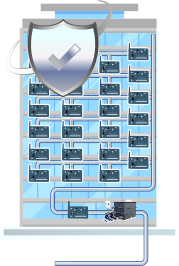

A combination of bronze, silver and gold will provide the most effective leak prevention system available.
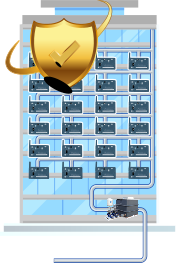
Automatic Flow Monitoring with Smart Shutoff Valves on the boosted supply to each unit/apartment. The most effective solution post-handover over the lifetime of the building.
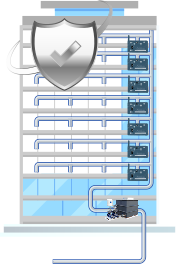

Automatic Flow Monitoring with Smart Shutoff Valves on the boosted supply to each floor (or each riser if plumbing is vertically fed). Ideal during construction because each floor can be isolated individually.
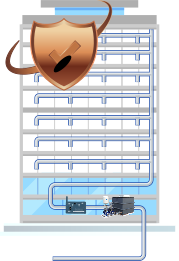

The absolute minimum you should be looking for is Automatic Flow Monitoring on the Mains Cold Water System and Boosted Cold Water System for the whole building. This is covered in the BREEAM WAT03 standard.
Got questions? Ask us!
We’re your H2O Heroes! Choosing the right water management solution can be tricky, but our friendly team is here to help.
We’ve compiled the top FAQs for quick answers - Read FAQ.
Water leaks can disrupt cooling systems, damage electrical equipment, and force partial or full shutdowns. Even minor incidents can impact uptime and service delivery.
Leak prevention systems monitor cooling infrastructure, pipework, plant rooms, and any pressurised or high-risk water systems that support critical operations.
Yes, continuous monitoring identifies subtle changes in water flow, allowing slow or concealed leaks to be detected before they become critical issues.
When abnormal behaviour is identified, alerts are triggered instantly. In higher-risk scenarios, systems can automatically isolate the water supply to prevent further damage.
By detecting issues early and reducing response time, leak prevention systems minimise the likelihood of incidents escalating into outages or service disruption.
Yes, systems can be integrated into both new builds and existing infrastructure, providing protection regardless of the age or design of the facility.



Sign up for the easiest way to stay in touch.