
Unified Leak Detection Compliance
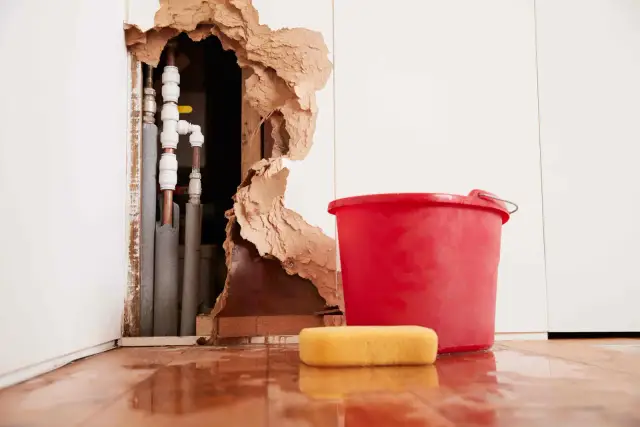
Water damage is consistently the leading cause of insurable property loss globally. To protect against this risk, modern commercial buildings need a water leak detection system that can satisfy a range of strict, and sometimes conflicting, international mandates. These include statutory regulations like WRAS, high-value sustainability criteria such as BREEAM WAT 02/03 and LEED v4.1, plus insurance requirements like the Joint Code of Practice (JCoP).
The Global Mandates: Meeting Water Efficiency and Risk Standards
Compliance requires addressing four areas: product legality, sustainability targets, construction risk management (JCoP), and Building Management System (BSRIA) integration. The eleven standards below cover all of these across UK, US, and global frameworks.
| Standard / Regulation | Region | Core Objective | Key System Requirement |
|---|---|---|---|
| 1. WRAS | UK | Statutory Product Legality. Prevent waste and contamination of the public water supply. | All wetted components (flow meters, valves, fittings) must hold WRAS Approval and be installed according to the Water Supply Regulations. |
| 2. BREEAM WAT 02 | UK | Mains and Sub-Metering for Usage Management. Ensure detailed water consumption monitoring and benchmarking. |
• Mains Metering: Install a pulsed water meter on the mains supply. • Sub-Metering: Sub-meter major water-consuming plant (>10% of total use) and connect all meters to a centralised monitoring system (BMS/BAS).
|
| 3. BREEAM WAT 03 | UK | Automatic Major and Minor Leak Detection. Minimise water wastage from all types of leaks. |
• Major Leak: Flow-based system with programmable thresholds for flow rate and duration. • Minor Leak: Flow control devices (PIR/timer valves) in sanitary areas (WCs).
|
| 4. JCoP | UK | Active Risk Mitigation and Construction Site Safety. Limit water damage during the construction and fit-out phases. | 24/7 Active Automatic Flow Monitoring Shut-off (AAFMS) with immediate remote alerts and automatic isolation of supplies outside working hours. |
| 5. BSRIA AG 9/2001 | UK | BMS Integration for Centralised Control. Standardise communication with the Building Management System. | Must provide outputs for transmitting specific alarm status and valve position feedback to the BMS/BAS. |
| 6. UK Building Regs (Part G) | UK | Statutory Water Efficiency. Ensure legal plumbing and enforce consumption limitations. | Enforces WRAS compliance and reinforces the need to limit water wastage through robust leak prevention features. |
| 7. SKA Rating | UK | Sustainable Commercial Interior Fit-Out. Assess and reduce water usage in refurbishment projects. | Requires leak detection and flow control devices for newly installed services within the fit-out scope (e.g. new kitchens, washrooms). |
| 8. LEED v4.1 (WE) | US | Water Efficiency and Consumption Tracking. Encourage detailed water metering for baseline establishment and usage reduction. | Requires building-level water metering and sub-metering of major water consumers to track performance and detect anomalies. |
| 9. ASHRAE 189.1 | US | Code-Intended Green Building Standard. Dictates minimum requirements for sustainable design and operation. | Mandates metering and sub-metering of total and major consumption systems, providing the operational platform for required leak monitoring. |
| 10. Insurance & Loss Prevention | Global | Financial Risk Reduction and Asset Protection. Secure favourable insurance terms by minimising flood risk. |
• Mandatory automatic shut-off on main lines. • 24/7 remote alerts to designated personnel. • Forensic data logging for claims validation.
|
| 11. ISO 14001 | Global | Environmental Management Systems. Provide auditable evidence of water stewardship. | Enables accurate tracking and reporting of water resource conservation and waste reduction, supporting the organisation's environmental objectives. |
Actionable Compliance Checklist: 9 Unified Core Features
To achieve multi-national compliance using a single integrated system, the following nine essential features are required. These are organised into four sections.
How Quensus Delivers Against Each Requirement
Quensus LeakNet uses WRAS-approved flow meters and motorised ball valves in sizes from ¾ inch to 8 inches. Upon confirming a leak, the system automatically closes the isolation valve satisfying the mandatory automatic shut-off requirements of both JCoP and major insurers.
The FlowReporter app uses a single pulsed flow meter as the primary data source for whole-building metering and major leak detection simultaneously meeting both the BREEAM WAT 02 metering credit and the WAT 03 major leak detection requirement from one device.
LeakNet's AI builds a Normal Usage Profile for the specific building and sets adaptive thresholds for volume, time, and flow rate. This means alarms are calibrated to the actual building use, not a fixed generic limit, minimising false alarms while meeting BREEAM WAT 03 programmable threshold criteria.
Quensus LeakNet and SiteNet are explicitly Active Automatic Flow Monitoring Shutoff (AAFMS) devices, the exact technology named by the JCoP. Quensus is also listed as an Aviva Specialist Partner, confirming direct acceptance by major UK construction insurers.
FlowReporter supports sub-metering of major water consumers, including cooling towers and irrigation systems, feeding all data into a single centralised dashboard. This satisfies the advanced sub-metering credits required by LEED v4.1, ASHRAE 189.1, and BREEAM WAT 02.
LeakNet integrates with Building Management Systems via physical relay outputs (volt-free contacts) or API, transmitting distinct signals for alarm status and valve open/closed position. This meets BSRIA AG 9/2001 requirements directly. The flow algorithms run locally on the device protection remains active even if the network goes down.
LeakNet's zone monitoring capability allows individual sub-zones (plant rooms, comms rooms, kitchenettes) to be monitored and identified separately. When a leak is detected, the system identifies the specific zone for rapid response, rather than simply triggering a building-wide alert.
The FlowReporter app delivers immediate real-time alerts via SMS and email to designated facility managers and monitoring services, 24 hours a day, 7 days a week. This is a specific requirement of both the JCoP and major insurers for out-of-hours emergency response.
FlowReporter maintains a detailed, time-stamped events log and full historical flow data, available at any time for commissioning sign-off, LEED and BREEAM WAT 02 performance tracking, and forensic insurance audit validation. This is the auditable compliance record the guide demands.
De-risking Your Investment
By implementing a unified system designed to meet this checklist, your asset immediately gains four critical benefits.
Simplified, Consolidated Compliance
Quensus LeakNet meets the mandates of all major global standards. This minimises installation complexity, reduces hardware costs, and simplifies maintenance compared to fragmented, component-based solutions.
Maximised Sustainability Ratings
Meeting the combined technical requirements for BREEAM WAT 02/03 and LEED v4.1 (Requirements 2, 3, and 9) ensures the project secures maximum available credits. The system is designed for BREEAM WAT 03 and its AI self-learning nature is recognised by BREEAM guidance as a compliant smart system, significantly enhancing the building's asset value and marketability.
Lower Insurance Costs and Deductibles
Compliance with the risk requirements of JCoP and major insurers leads to the building being classified as a lower risk for water escape, often resulting in reduced insurance premiums and lower deductibles. As an Aviva Specialist Partner, Quensus LeakNet and SiteNet are the AAFMS devices named by JCoP directly.
Avoidance of Catastrophic Downtime
By providing both continuous flow monitoring and localised spot detection, LeakNet ensures rapid, automatic isolation of water supplies, preventing catastrophic damage that can lead to weeks or months of business interruption. The FlowReporter app keeps facility teams informed 24/7 via real-time SMS and email alerts.
One System. Every Standard. Full Compliance.
A fully compliant water leak detection system is not a cost — it is a mandated investment in asset integrity and operational resilience.
Quensus LeakNet and FlowReporter are built to meet WRAS, BREEAM WAT 02/03, JCoP, BSRIA, LEED v4.1, and insurance requirements from a single, integrated installation. Speak to the team today to find out how.
Discover LeakNet Request a Quote