
Why Leak Detection Costs Are Rising and Why Prevention Matters More
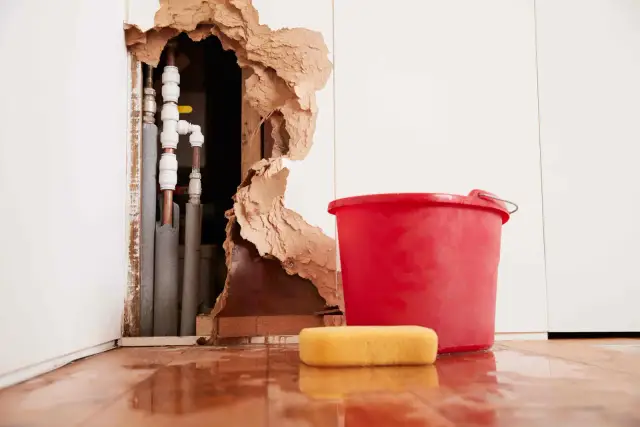
Water leaks are more than an inconvenience. Across the UK built environment they contribute to significant water loss, rising insurance claims, operational disruption and avoidable repair costs. Millions of litres of treated water are lost daily through infrastructure leaks, highlighting how widespread the issue remains.
For property owners, facilities managers and developers, the financial impact is rarely limited to fixing a pipe. Damage to finishes, electrical systems, equipment and building structure can escalate quickly, often alongside business interruption and insurance implications.
Traditionally, organisations have focused on detecting leaks once they occur. Increasingly, the conversation is shifting towards preventing them altogether.
Typical Leak Detection Costs in the UK
Prices for Leak Detection can vary from £80 – £1,600 across the UK(Checkatrade). On average, most property owners can expect to pay around £500, though this depends on several factors.
| Detection Method | Typical Cost (UK) | Notes |
|---|---|---|
| Standard Leak Detection | £80 – £1,600 | Basic inspection for residential and small commercial properties |
| Infrared / Thermal Imaging | £150 – £1,000 | Useful for hidden leaks behind walls or under floors |
| Acoustic Detection Device | £1,000 – £1,500 | Detects sound of leaks in pressurised systems |
| Tracer Gas Detection | £250 – £2,000 | Specialist technique for underground or hard-to-access pipes |
Factors That Influence Leak Detection Costs
Several factors affect how much leak detection will cost:
1. Leak Location & Accessibility
Hidden leaks inside walls, below floors, or underground require specialist equipment and more time.
2. Detection Method
Different technologies vary in sensitivity, cost, and suitability:
- Acoustic sensors and thermal imaging detect leaks without damaging surfaces.
- Flow analytics and continuous smart monitoring, detect anomalies early, often before visible damage occurs.
3. Property Complexity & Size
Larger or multi-occupancy buildings have more extensive pipe networks, increasing both investigation time and cost.
4. Urgency
Emergency call-outs or out-of-hours investigations usually carry a premium compared with scheduled assessments.
Insurance Considerations: Trace & Access
Many UK insurance policies include Trace and Access cover, which helps fund the process of locating hidden leaks. However, this is frequently misunderstood.
Typically:
- It covers finding the leak, not repairing it
- Policy limits and excesses still apply
- Secondary damage may or may not be fully covered
Even when insured, leaks often lead to premium increases, higher excesses or more restrictive future terms. Insurers are increasingly focused on prevention rather than post-incident investigation.
Hidden Costs of Undetected Leaks
The most expensive leaks are often the ones that go unnoticed. Slow, persistent leaks can:
- Waste thousands of litres of water annually
- Cause long-term structural deterioration
- Lead to mould and air quality issues
- Increase operational and maintenance costs
- Damage tenant relationships and brand reputation
By the time detection is triggered, damage has often already begun. You can learn more about the signs of a hidden leak here.
This is why many organisations are shifting away from a detect-and-repair mindset towards prevention-first strategies.
Preventing Leaks with Smart Detection
Traditional detection solutions focus on identifying leaks once water has already escaped. Even advanced monitoring systems that generate alerts still rely on human intervention to isolate the problem.
Prevention technology works differently.
Rather than simply identifying abnormal conditions, prevention systems actively control water supply, stopping potential leak events before significant damage occurs.
This shift mirrors trends seen in other risk areas:
- Fire safety moved from alarms to suppression
- Cybersecurity moved from alerts to automated blocking
- Financial systems moved from fraud reporting to real-time prevention
Water management is following the same evolution.
How Quensus Approaches Leak Prevention
Quensus does not operate as a leak detection service. Its focus is on preventing escape-of-water incidents altogether through intelligent water control technology.
Solutions such as LeakNet Gen2 combine:
- Continuous flow monitoring
- Behavioural analysis of water usage
- Automated shut-off capability
- Real-time visibility across sites
The goal is not simply to find leaks faster. It is to stop them from escalating into damaging events.
Key outcomes typically include:
Reduced damage risk
Automatic intervention limits water escape before it becomes destructive.
Lower operational disruption
Facilities teams respond to alerts with context rather than reacting to emergencies.
Improved insurance positioning
Demonstrating proactive risk mitigation can support underwriting confidence.
Better water efficiency
Continuous monitoring highlights inefficiencies and abnormal consumption.
Why Prevention Is Becoming the Industry Standard
Modern buildings are increasingly expected to be resilient, sustainable and data-driven. Prevention aligns directly with these expectations.
Organisations adopting proactive water control benefit from:
- Greater asset protection
- Reduced lifecycle costs
- Stronger ESG performance
- Improved tenant and occupant confidence
- Better long-term insurance outcomes
Detection remains useful, but it is rapidly becoming the baseline rather than the solution.
Moving from Cost Management to Risk Elimination
Leak detection will always have a role when investigating existing problems. But relying on detection alone means accepting that damage will occur before action can be taken.
Prevention changes that equation completely.
By stopping abnormal water flow before it escalates, organisations can reduce disruption, protect assets and avoid the hidden costs that traditional reactive approaches create.
For many property owners and developers, the question is no longer whether leaks can be detected. It is whether they should still be allowed to happen at all.
If this sounds interesting, you can receive an instant quote here.