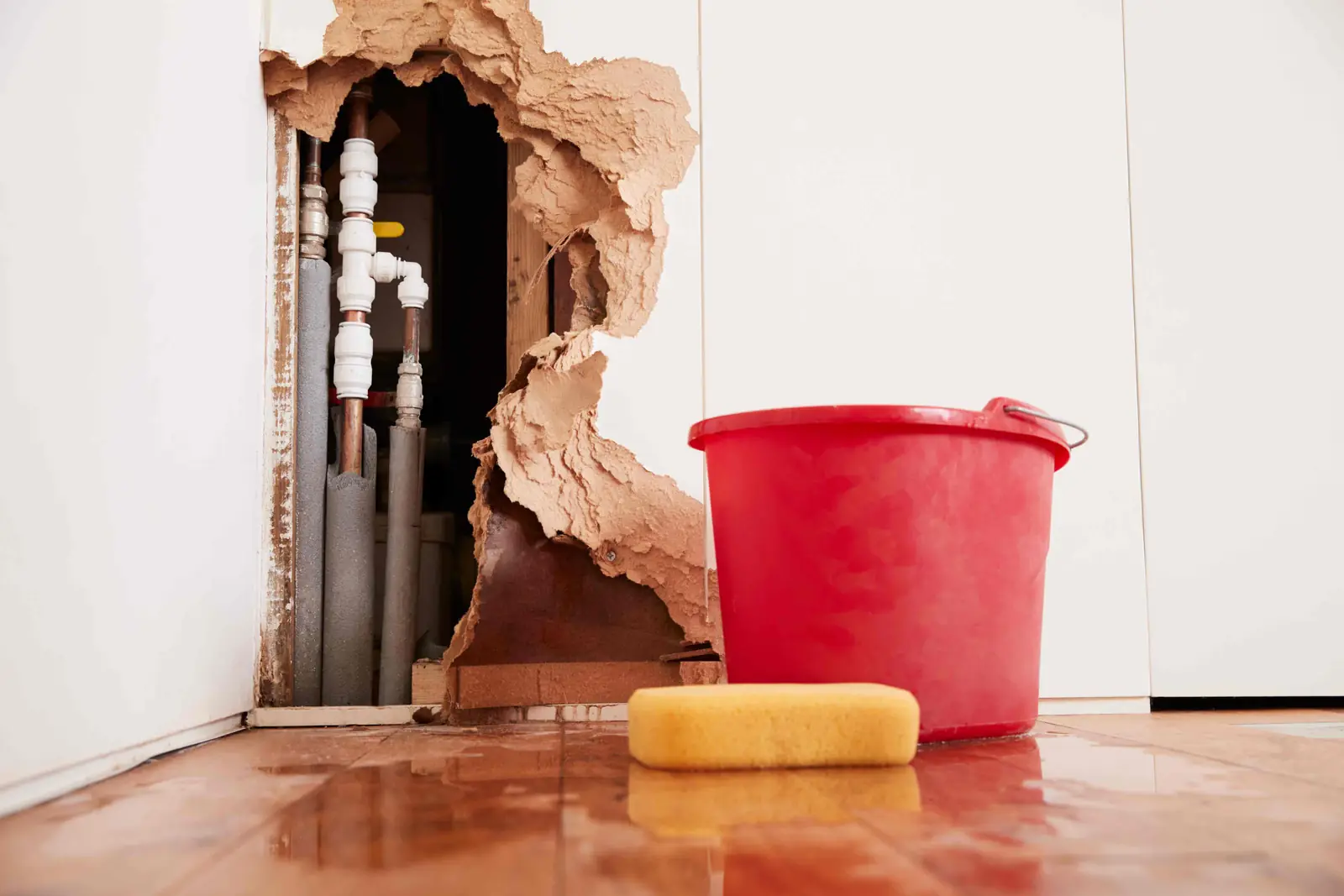

A small leak on an empty commercial floor does not announce itself. This is a realistic sequence, compiled from the way escape-of-water losses actually develop, not a report of one named building. The timings will be familiar to facilities managers, loss adjusters, and anyone who has opened a ceiling to find the damage started days earlier.
A multi-let office. The third-floor suite is between tenants. The lights are off, the access log is quiet, and a flexible connector at the tea point has started to let go. Water leaves the fitting under mains pressure. There is no drip on a carpet anyone walks, because nobody is walking there.
The first few hours: a leak with nothing to see
In the first hour the leak is a flow event. Water runs into a void, a cupboard base, or along a tray. The suite still looks ready to market. A security patrol in the lobby sees a dry floor. The building management system, if it is watching temperature and access, has nothing to report about the rising main.
What has changed is the consumption trace. A floor with no occupancy should sit close to flat. Continuous flow, at a rate no one is opening a tap to explain, is the first warning the building produces. Miss it, and the volume is already measured in hundreds of litres before anyone has a reason to take the lift to the third floor.
Commercial water leaks of this kind are ordinary failures: a fill valve that does not seat, a push-fit that has worked loose, a connector past its service life. The fitting is small. The time it is left open is what turns it into a loss.

The next 24 hours: water reaches the floor below
Left running, water does not stay in the suite where it started. It tracks along the ceiling void, finds a penetration, and arrives in the occupied office underneath as a stain, a bulging tile, or a drip onto a desk. By the time the tenant on the second floor emails the managing agent, the third-floor corridor can still look untouched.
Overnight extends the loss. A leak that starts after the cleaners leave has the whole night, and sometimes a weekend, before the next person with a key attends. Until someone closes a valve, the volume is limited only by how long the supply stays open. Finding that valve, in a cupboard on a floor the team does not visit every day, takes longer than the first hour of flow.
The following days: damage moves past the finishes
Once water has been in the fabric for a day or more, the schedule of work is no longer a single ceiling tile:
Ceilings and floors. Plasterboard, tiles, raised-floor panels, and the coverings in the suite below.
Electrical installations. A wet distribution board, or soaked containment in the riser, takes the affected floors off supply until an electrician will sign them back on.
Equipment and fit-out. Furniture, floor boxes, comms cabinets, and tenant equipment that sat under the drip.
The void itself. Insulation and fire-stopping that has to be opened, dried, and reinstated before the suite can be re-let.
Drying takes longer than the leak took to start. A demise that could have been shown to a prospective tenant becomes a drying job measured in weeks. The vacant third floor, which looked like a letting problem, becomes a building-fabric problem for the floors that were occupied and trading.
The financial consequences, including the insurance claim
The costs arrive in separate piles, and they rarely arrive together.
Repairs. Strip-out, dry-down, and reinstatement of ceilings, floors, and any electrical equipment that cannot be certified.
Business interruption. The tenant below may lose the use of part of their space. Rent, service charge, and loss-of-income discussions follow the repair programme.
The water bill. A continuous leak is also a utility cost, often noticed only when the next invoice is checked against the last one.
The claim. Escape-of-water insurance claims are among the most frequent and expensive property losses in the UK. The Association of British Insurers has reported insurers paying around £1.8 million a day on these claims. A single commercial file can include the excess, a question about reasonable precautions, and a renewal conversation the owner would prefer to avoid.
The connector that failed may have cost very little. The claim reflects how long water was allowed to move. Insurers and risk managers have been asking for prevention, including automatic isolation, alongside inspection. The Fire Protection Association’s Joint Code of Practice on escape of water puts early intervention at the centre of that expectation. Quensus works with insurers on this control as a specialist partner of Aviva Risk Management Solutions.
The other timeline: an alert, then automatic shut-off
The same building, with intelligent monitoring, changes outcome in the first hour. That is the hour in which the job can still be a repair.
LeakNet has learned that this supply uses almost no water when the suite is dark. Continuous flow that does not fit that pattern raises an alert to the facilities manager or the on-call number. Someone knows while the ceiling below is still dry.
Where an automatic water shut-off system is configured, LeakNet can isolate the supply without waiting for that person to reach the plant room. The volume left to escape is what was already in the pipework. Where zones are fitted, the affected area can close while the rest of the building stays on. Shut-off remains a designed control: it has to leave the fire main available, and it has to be commissioned with the people who will answer the alert.
The event is then on the record in FlowReporter, with a time. For an insurer or a risk manager, the file can show that abnormal consumption was detected and the supply was isolated, where that was the agreed response. How that evidence is used at placement and renewal is covered in our escape-of-water work with insurers and the Water Risk Briefing.
Who feels the difference
For a commercial owner, the monitored timeline ends in a repair and a tenant who was told before their ceiling failed. For a facilities team, it is a call-out with the water already off. For an insurer, it is a smaller loss and a control that can be described at placement: monitoring that knows the building, an alert to a named person, and shut-off where the risk warrants it.
The third floor does not need an occupant for any of that to work. The awkward escape-of-water claims are often the ones where nobody was present for the first hour. The cost of leaving a leak to run is largely a question of that hour.
A question worth asking of each vacant demise
For every empty or part-occupied suite, two answers matter. Who would know tonight if water started moving, and what would stop it before morning? If both answers are “whoever is next on site”, the first timeline is the one the building is on.
Speak to Quensus about automatic water shut-off and monitoring for commercial buildings.
Or get a instant quote here.