
We are proud to announce that Quensus has secured WEL1 funding for The WIN Initiative: Enabling Non-Household Water Reduction through an Action-Driven Water-Insurance Nexus.
The project has been selected as part of the first round of the Water Efficiency Lab, a national innovation programme focused on turning water-use data into practical action that reduces demand across homes, businesses and non-household environments.
For us, this is an important milestone. It recognises the growing need for smarter, more actionable water management across commercial buildings and supports our mission to help organisations move beyond basic monitoring towards measurable, operational change.
Quick Insight
The WIN Initiative will use real-time water and occupancy data to identify hidden water waste across commercial buildings and turn insight into practical action.
Quensus is working in partnership with Direk, Aviva, Wates, Everflow, the University of Surrey, Weir The Agency and Waterwise.
The first Water Efficiency Lab, funded by Ofwat’s Water Efficiency Fund, has awarded funding to seven projects helping homes and businesses save water.
Over five years, the Water Efficiency Lab will invest £25 million in solutions that help people and businesses take control of their water use.
Run by Ofwat and Challenge Works, with support from Arup and Isle Utilities, the Water Efficiency Lab aims to fund promising solutions that can help cut water demand across both households and businesses.
A total of £25 million will be available through annual Water Efficiency Lab competitions between 2025 and 2030. Each competition will explore a different theme, designed to target funding towards key challenges and the most critical barriers to water efficiency.
The first initiative focused on innovations that give people and businesses the insights they need to better understand their water usage and the tools to take action to reduce it. The aim is to help cut bills, preserve water resources and protect the environment.
You can find out more about the Water Efficiency Lab and the wider Water Innovation Fund Challenges here:
https://waterinnovation.challenges.org/
This comes at a critical time for water management across England and Wales. In England, water is being used faster than nature can replace it, while in Wales, the changing climate is placing growing pressure on water supply. Although both countries are known for rainfall, climate change is increasing the risk of warmer, drier summers and wetter winters, affecting how much water is reliably available for homes, businesses and the natural environment.
Closing the Gap Between Water Data and Action
Across commercial buildings, water efficiency can be difficult to manage in real time.
Facilities teams may have access to meter readings, reports, alerts or compliance documents, but this does not always translate into a clear understanding of what is happening across a building. The challenge is not simply collecting data. The challenge is knowing where waste is occurring, why it is happening and what action should be taken first.
In complex commercial environments, water usage is shaped by many factors. Occupancy changes throughout the day. Cleaning schedules, staff movement, visitor numbers, plant rooms, washrooms, kitchens and operational routines can all affect consumption.
Without the right context, it can be difficult to distinguish between expected usage, inefficient behaviour, hidden leaks and avoidable waste.
The WIN Initiative has been designed to close that gap.
Rather than looking at water consumption in isolation, the project will connect real-time water data with building occupancy insight and Water Management Plans. This will allow facilities teams to better understand the relationship between how a building is used and how water is being consumed.
An 18-Month Trial Across 30 Commercial Buildings
Over an 18-month trial, we will deploy The WIN Initiative across 30 commercial buildings, using more than 1,000 water and occupancy sensors to identify hidden water waste and connect usage patterns to how buildings are actually being occupied and operated.
This approach will help create a more detailed picture of water behaviour across commercial environments. By combining water data with building activity, the project will support a more informed understanding of where waste is happening, what may be causing it and where practical improvements can be made.
The aim is not simply to produce more data, it is to turn that data into something facilities managers can use.
By combining real-time monitoring with Water Management Plans, we will generate practical fix lists for facilities managers. These fix lists will translate monitoring data into clear operational actions, helping teams prioritise improvements, reduce unnecessary consumption and respond to issues before they become larger problems.
Turning Insight into Practical Fix Lists
This action-driven approach is central to the project.
Many commercial buildings already generate large amounts of data, but data alone does not always lead to change. Facilities teams need insight that is clear, prioritised and connected to the day-to-day realities of managing a building.
The WIN Initiative will support building operators in understanding what needs to change, where the opportunity sits and how water-saving measures can be implemented in practice.
This could include identifying areas of persistent low-level usage, unusual consumption patterns, inefficient operational routines or hidden waste that may otherwise go unnoticed. By connecting these insights to Water Management Plans, the project will help create a practical route from detection to action.
For facilities managers, this means less time interpreting raw information and more clarity on the steps that can make a measurable difference.
Supporting a New Insurance-Backed Efficiency Standard
The project also aims to support the development of a new insurance-backed efficiency standard for commercial buildings.
By linking verified monitoring data, building performance insight and practical water management actions, The WIN Initiative will explore how insurers, facilities managers, water companies and technology providers can work together to reduce risk, improve resilience and support more sustainable building operations.
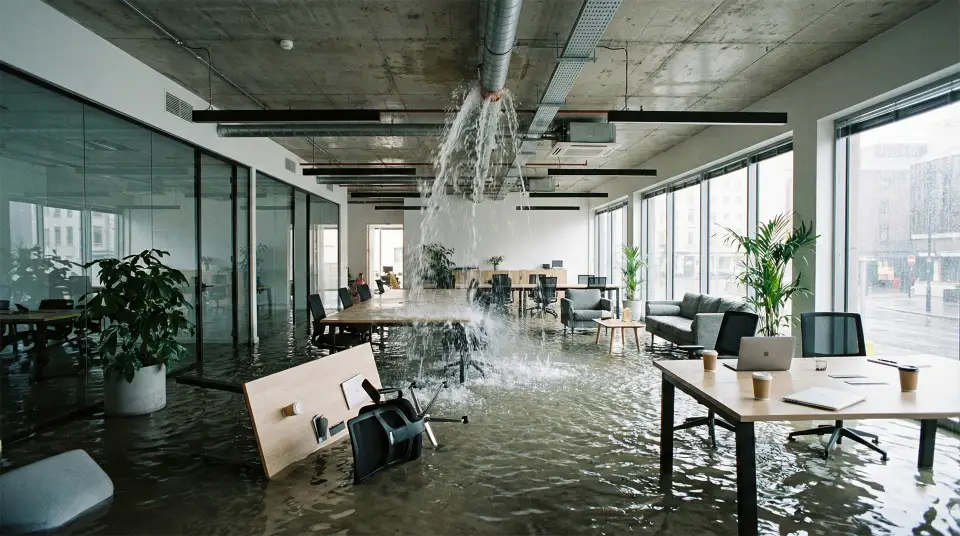
Escape of water events, hidden leaks and inefficient usage can create significant financial, operational and environmental pressure. In commercial buildings, these issues can be difficult to detect early, particularly where estates are large, complex or used in different ways throughout the day.
Through this project, we will explore how contextual IoT sensors and verified data can provide a clearer view of risk. This has the potential to support more proactive management, better decision-making and a stronger evidence base for water efficiency standards across the built environment.
Moving from Reactive Water Management to Proactive Insight
As pressure on water resources continues to increase, businesses need better visibility of how water is being used across their estates.
Hidden leaks, inefficient usage patterns and operational waste can often go unnoticed, particularly in complex buildings where occupancy changes throughout the day. By the time an issue becomes visible, the water loss, disruption or cost may already be significant.
The WIN Initiative will provide a clearer view of the relationship between water use and building activity, helping commercial sites move from reactive water management to a more proactive, data-led model.
For us, this is where the greatest opportunity sits. Smarter monitoring should not only help identify that water is being used. It should help building operators understand what is happening, why it matters and what action can be taken.
Dr Daniel Simmons, CEO of Quensus, said:
This funding transforms how businesses target hidden water waste. By fusing water data with occupancy context, we give facilities teams the exact insights needed to take immediate action. This validation accelerates our mission to establish a nationwide standard for sustainable, data-driven water management.
Paul Hickey, Managing Director of RAPID at Ofwat, said:
These seven projects are designed to make water-efficient use the easy default in homes and businesses across England and Wales, through smarter appliances, better data and tools that put useful information directly into customers’ hands. This £5 million prize is the first tranche of £25 million that will be awarded through the Water Efficiency Lab over five competitions, supporting innovators whose work will help deliver more resilient water services for customers and the environment.
Working Alongside Industry Partners
The project brings together a strong group of partners and collaborators, including Direk, Aviva, Wates, Everflow, the University of Surrey, Weir The Agency and Waterwise.
Together, we will explore how smarter monitoring, actionable insight and insurance-backed standards can help commercial buildings reduce water waste at scale.
Each partner brings valuable expertise to the project, from water efficiency and behavioural insight to insurance, facilities management, communications, technology and commercial building operations. This collaborative approach is essential to the wider ambition of the initiative: creating a model that is practical, scalable and capable of supporting meaningful change across non-household environments.
What’s Next?
The WIN Initiative will now move into delivery, with Quensus and its partners preparing for deployment across the 30 commercial buildings included in the 18-month trial.
The next stage will focus on installing and integrating water and occupancy sensors, connecting real-time data with Water Management Plans and developing practical fix lists that support facilities managers in reducing avoidable water waste.
As the project progresses, the partnership will explore how the findings can support wider adoption across commercial buildings and contribute to the development of an insurance-backed efficiency standard.
We will continue to share updates as the project develops, including progress from the trial, partner activity, key learnings and the wider opportunity for smarter water management across the built environment.
A Step Forward for Smarter Water Management
For Quensus, this funding represents an important step forward in our mission to make water management more intelligent, measurable and actionable across the built environment.
The WIN Initiative will not only demonstrate how technology can identify hidden water waste, but also how insight can be turned into meaningful operational change.
By combining water data, occupancy context, practical fix lists and insurance-backed thinking, the project will help show how commercial buildings can move towards a more proactive and sustainable approach to water management.
This is a major milestone for Quensus and a significant step towards smarter, more sustainable water management across the commercial built environment.
About the organisations involved
Quensus
Quensus is an intelligent water management and leak detection company helping organisations monitor, understand and reduce water waste across commercial and operational environments.
Through its LeakNet and SiteNet systems, Quensus provides real-time monitoring, leak detection and actionable insight to help businesses improve water efficiency, reduce risk and make smarter decisions across their estates.
Find out more: /
The Water Efficiency Lab
The Water Efficiency Lab is an annual, challenge-led competition to unlock and scale innovations that reduce water use by households and businesses across England and Wales.
The first round of the Water Efficiency Lab focused on providing water customers with actionable insights that help them understand and reduce their water use.
The Water Efficiency Lab is delivered by Challenge Works, alongside Arup and Isle Utilities, and funded by Ofwat’s Water Efficiency Fund.
Find out more: https://waterinnovation.challenges.org/
Challenge Works
Challenge Works designs and runs challenge prizes that attract innovative talent, incentivise progress and support the development of breakthrough solutions to major social, environmental and technological challenges.
As part of Nesta, the UK’s innovation agency for social good, Challenge Works has experience designing competitions that bring together innovators, partners and funders to solve clearly defined problems and unlock practical, scalable solutions.
For the Water Efficiency Lab, Challenge Works is supporting the delivery of a challenge-led programme designed to identify and scale innovations that help households and businesses better understand and reduce their water use.
Find out more: https://challengeworks.org/
Arup
Arup is a global collective of designers, consultants, engineers, planners and technical experts dedicated to sustainable development.
Working across the built and natural environments, Arup helps clients and partners respond to complex challenges, from infrastructure and climate resilience to water, sustainability and urban development. Its work focuses on shaping safer, more inclusive and more resilient places while supporting long-term environmental and social value.
For the Water Efficiency Lab, Arup brings technical, advisory and sustainability expertise to help support innovations that can contribute to more resilient water systems and better demand management.
Find out more: https://www.arup.com/
Isle Utilities
Isle Utilities is a global consultancy working across the water sector to accelerate innovation, support technology adoption and help organisations respond to environmental and operational challenges.
Through its work with utilities, technology providers, regulators and industry partners, Isle Utilities helps identify, assess and scale new solutions that can improve water efficiency, resilience and sustainability.
For the Water Efficiency Lab, Isle Utilities brings specialist water sector insight and innovation expertise, supporting the programme’s aim to unlock practical solutions that help people and businesses reduce water use.
Find out more: https://isleutilities.com/