
There is a common assumption in the real estate sector that risk reduces as a project moves from construction into operation. From a quantitative risk management perspective, it works the other way around.
The point of Practical Completion does not represent the end of risk; it represents the commencement of the Handover Vulnerability Gap. This is a period defined by: the asset is at Peak Value (100% of CapEx deployed) but possesses Minimum Operational Resilience (untested systems and zero performance history) i.e. where financial exposure is at its highest, while operational resilience is at its lowest.
The building is complete, the systems and history are unproven, and in many cases, no one is there.
However, the rise of Artificial Intelligence (AI) has enabled a shift in how this risk is managed. We are moving from a reactive repair and replace model to a proactive predict and prevent paradigm, powered by intelligent systems such as the Quensus LeakNet platform.
The Handover Vulnerability Gap : A Financial Blind Spot
The period between completion and stable occupancy is one of the most exposed phases in a building’s lifecycle.
During this window, the asset faces three structural vulnerabilities:
The Insurance Liability Gap
A grey area between Construction All Risk policies and operational Property and Casualty policies, where disputes over liability for defects can delay remediation.
The Operational Gap
The absence of occupants removes the human sensor network. In a vacant building, an issue that would normally be spotted immediately can go unnoticed for days.
The Data Gap
A newly commissioned building is effectively a data-void asset. Without a baseline of normal behaviour, identifying anomalies becomes extremely difficult. Tools such as FlowReporter begin establishing this behavioural baseline immediately.
The 30% Smoking Gun
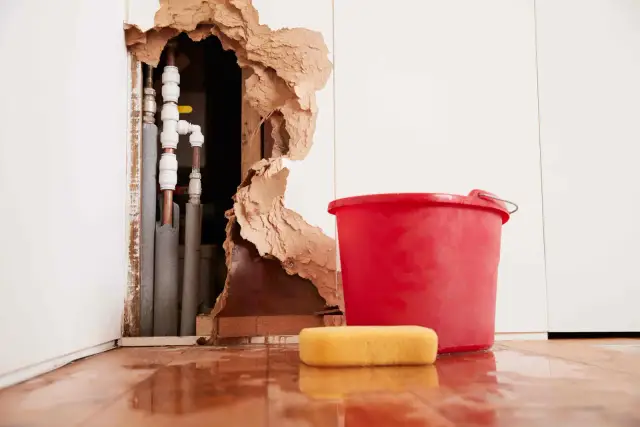
The primary threat during this gap is Escape of Water (EOW).
Actuarial data provides a smoking gun regarding why traditional commissioning fails: 30% of EOW claims are attributable to poor installation or component failure.
These are not wear-and-tear issues, they are latent defects such as pinhole leaks, faulty crimped joints, or unseated O-rings present from Day One. Traditional commissioning protocols (pressure tests) are snapshot tests designed to find catastrophic bursts, not the micro-leaks that cause the most damage over time.
Continuous digital oversight, integrated within the Quensus product range, replaces this static model with persistent monitoring.
What Commissioning Detects vs What It Misses
Traditional commissioning is useful for identifying major failures, but it does not provide visibility of the smaller defects that often lead to escape of water losses after handover.
The £2.5 Million New Build Catastrophe
To understand the financial stakes, we must look at a documented catastrophic handover flood in a new, luxury, unoccupied residential block.
A leak occurred after handover but before tenant occupancy. Because the building was vacant, the water ran unnoticed, resulting in a £2.5 million direct indemnified loss. However, a Total Loss Deconstruction reveals the damage went far beyond the repair bill:
Direct Costs
Complete saturation of the source apartment, cascading damage through floor slabs, and the destruction of high-value MEP systems (lift controls and BMS).
Consequential Costs
The project suffered an 18-month delay to opening. This meant 18 months of lost rental income and massive unplanned interest penalties on development loans that could not be refinanced.
Asset Stigma
The building was branded damaged goods. Future buyers leveraged the event to negotiate lower prices, and the asset was red-flagged in insurance databases, leading to permanently higher premiums.
For real-world prevention outcomes, review the Quensus case studies.
The Vacancy Multiplier: Scenario A vs. Scenario B
The risk of an unoccupied building is not just higher; it is in a different category of severity. Vacancy acts as a catastrophe multiplier by eliminating the single most critical variable in risk mitigation: Response Time.
Consider the Journey of a Leak in two identical scenarios involving a 0.5 liter/minute leak from a faulty pipe connector:

From Detection to Autonomous Intervention
Mitigating this risk was previouslly impossible because technology was still catching up. Now, the advancement of technology has made true prevention possible.
1. Connected vs. Non-Connected
Unlike traditional devices, modern systems like LeakNet are fully connected to the internet (with offline capabilities). This connectivity closes the Data Gap by providing real-time consumption data. The system breaks down usage for users and insurers, allowing for the immediate detection of anomalies with automatic intervention to prevent leaks from happening.
2. Intelligent Adaptation (AI)
One of the most significant advancements is the use of AI to learn the building's behavior. The system analyses usage data to establish dynamic alarm thresholds. It adapts to the specific environment whether an apartment building, airport or university. This intelligence minimises false alarms while ensuring that genuine pinhole leaks are flagged instantly.
3. Remote Control and Automation
To neutralise the Vacancy Multiplier, LeakNet allows for the remote control of motorised or solenoid valves from anywhere in the world. It can be set to automatically to shut off the water supply when a leak is detected. This capability seizes "Scenario B" (the weekend catastrophe) and forces it back into "Scenario A" (a minor maintenance ticket).
4. British Engineering and Compliance
Designed for the specific regulatory environment of the UK, these systems meet WRAS standards and integrate seamlessly with Building Management Systems (BMS). Features such as special logins for Concierge teams ensure that the technology supports the human FM teams rather than replacing them.
The New Underwriting Model
The escalating cost of EOW claims is forcing the insurance industry to pivot. Insurers are moving away from the unsustainable repair and replace model toward a predict and prevent strategy.
Insurance-approved status for technologies like Quensus is a validation that the system materially reduces the likelihood of loss.
● For Insurers: It protects the loss ratio.
● For Asset Owners: It prevents the stigma of a major claim and the uninsured costs of delays.
It is rapidly becoming the case that Active Risk Management is a prerequisite for affordable coverage. Underwriters are increasingly reluctant to write full policies on high-value, vacant new builds without validated 24/7 monitoring in place. Quensus are also working with Aviva as a specialist partner and Chubb Insurance to provide water leak detection and prevention solutions, you can find out more here.
Without monitoring, response can take days. With intelligent systems, automatic intervention takes seconds. The failure to install active, continuous, and automated water monitoring is no longer a simple oversight. It is a wilful acceptance of risk.
The high financial exposure during handover and the availability of AI-driven mitigation tools demands a change in industry standards with the difference between a minor issue and a major loss coming down to response time.
By deploying intelligent online leak detection devices like LeakNet, developers and asset owners can bridge the Handover Vulnerability Gap.
They move from reacting to incidents to preventing them, ensuring that assets remain protected, insurable, and operational from the moment of completion.