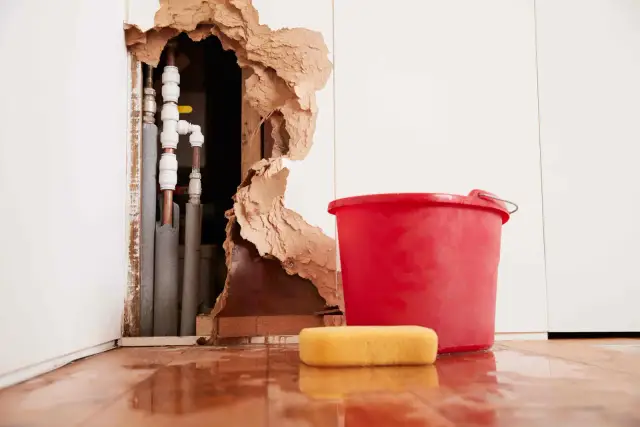

The Bill Arrives. The Damage Is Already Done.
When was the last time anyone in your building thought about water? Not the invoice, the actual water flowing through the pipes right now.
For most businesses, water is managed the same way it has been for decades: a meter is read once a month or quarter, a bill arrives, and someone pays it. There is rarely any investigation into where that water went, or when.
This approach creates a dangerous data darkness. A manual meter read acts like an autopsy: it reveals the financial damage only after the capital has already been lost, with no opportunity for intervention. What is being lost is sometimes called non-revenue water, meaning water that passes through the meter, is paid for, but performs no useful function before entering the sewer. Research confirms that roughly 25% of water supplied to commercial businesses is lost this way. That is a quarter of everything you are paying for, silently draining away.
The businesses making real progress on this have moved from a reactive, supply-side approach (just make sure the water is on) to actively managing every litre. In that model, waste is not a minor operational nuisance. It is a direct financial loss.
Not All Leaks Are Created Equal
Toilet mechanisms fail in two main ways: degradation of the flapper valve, or failure of the inlet valve to shut off. The severity and the cost can vary massively.
Annual Cost of Common Toilet Leaks (combined supply and sewerage at approx. £3.50 to £4.00 per m³)
All figures are based on UK commercial water rates and documented leak flow rates. A catastrophic valve failure at 6 litres per minute loses 3,153 m³ per year. At £4.00 per m³ combined supply and sewerage rate, that is £12,612 per year from a single fixture.
A leak does not only incur a supply charge, it also triggers a sewerage charge. For most commercial meters, wastewater is billed at 90 to 95% of the potable water reading, known as the Return to Sewer allowance. This means businesses are charged for sewage treatment on water that simply flowed straight down the drain without ever being used.
How Much Could a Leak Be Costing You?
Use the tool below to scale the leak cost figures to your building.
Leak Cost Estimator
Adjust the inputs to reflect your building
Annual cost assumes approximately 10% of fixtures develop a fault at the selected severity. The water rate selection adjusts the calculation proportionally to reflect regional variation across the UK.
Hot Water Leaks Cost 5x More Than You Think
Wasting cold water is expensive. Wasting hot water means you are also throwing away the energy used to heat it, and that cost can be far greater than the water charge itself.
Water has an exceptionally high specific heat capacity. To raise 1,000 litres from a typical UK mains temperature of 10°C to a usable 60°C requires approximately 58.1 kilowatt-hours of energy. The financial impact of wasting that depends on how your building heats water:
Total Cost of Wasting 1 m³ of Hot Water
The 5x figure refers specifically to electrically heated water, where the energy cost alone is 4.98x the water charge. For gas-heated systems at 80% boiler efficiency, the ratio is 1.45x. Both are calculated from the 58.1 kWh of energy required to raise 1 m³ of water by 50°C.
This creates a clear maintenance priority. A leaking hot tap is five times more costly than a leaking cold one. Hot water loops and electric water heaters should therefore be the first priority in any leak detection or maintenance programme. Insulating hot water pipes also reduces the amount of cold water that runs off before hot water reaches the tap, saving both energy and water at the same time.
From Guessing to Knowing: Smart Monitoring
The main meter tells you how much water you used but Smart sub-metering tells you where, when, and why, and alerts you the moment something goes wrong.
The primary revenue meter installed by your utility company is designed for billing, not management. Diagnosing a specific inefficiency using only that meter is like trying to find an engine fault by looking at your odometer. It tells you how much was used, but not where, when, or why.
Traditional meters are also read manually every 30 to 90 days. This creates a window in which a serious leak can run entirely undetected. LeakNet is designed to replace this reactive approach with proactive risk control:
Continuous Monitoring
LeakNet reads every 15 minutes and continuously analyses flow data to understand what normal usage looks like for your building.
AI Anomaly Detection
Machine learning identifies deviations from normal patterns with remarkable accuracy, flagging potential leaks before damage escalates.
Instant Alerts
Notifications are sent via SMS, email, and the FlowReporter app to property managers and relevant stakeholders the moment an issue is detected.
Remote Shut-Off
Water can be shut off remotely through the FlowReporter app, or automatically when a fault is detected, stopping damage before it escalates.
The Water Balance Method
By sub-metering specific zones, facility managers can construct a water balance. The principle is straightforward:
This targeted approach reduces the time between a leak starting and someone knowing about it from months to minutes. The following zone types each carry distinct risk profiles that benefit from dedicated monitoring:
Washrooms
High variability linked to occupancy. Most prone to valve failures and silent toilet leaks. The highest priority zone for continuous monitoring.
Kitchens and Catering
Predictable usage peaks. Primary risk is taps left running, dishwasher faults, and overnight consumption when the area should be inactive.
Plant Rooms
Steady baseline for HVAC make-up water. Highest risk of catastrophic pipe bursts, which can cause serious damage before being noticed.
Irrigation
Seasonal and weather-dependent. High risk of underground leaks that can run for extended periods without any visible surface indication.
Do Not Guess What Works. Test It First.
In a typical scenario, a facility manager might replace all 500 tap aerators in a building based on a manufacturer's claim of 50% savings. But if the product creates a poor user experience (splashback or insufficient flow) occupants remove the devices and negate the savings. There is also a less obvious risk: variations in system pressure across a building can mean a "low flow" device actually delivers standard flow rates in high-pressure zones, making the claimed saving disappear entirely. Without testing first, a capital expenditure project becomes a sunk cost.
Real-time sub-metering data enables a more rigorous approach borrowed from digital marketing: A/B testing.
Establish a Baseline
Use sub-meters to measure consumption in two comparable zones over 2 to 4 weeks. This establishes a reliable correlation between the two under normal operating conditions.
Install in One Zone Only
Fit the new product (for example a 1.7 litre per minute spray tap or a waterless urinal) in Zone A as the test group. Zone B remains unchanged as the control.
Measure Real Behaviour
Did total consumption drop? Did users leave taps running longer to compensate? If the flow rate is halved but the duration doubles, the net saving is zero. This rebound effect is only visible through real-time monitoring data.
Decide with Evidence
Only approve the capital expenditure for an estate-wide rollout once the data confirms a positive return on investment and good user acceptance. No guesswork, no wasted spend.
Comparative trials of water-saving aerators have shown tap water usage can fall by half, but only if the aerator type matches how people actually use the tap. Without testing, a well-intentioned upgrade can frustrate users, get removed, and return your building to its wasteful baseline.
What Happens When You Can See Your Water
These are documented results from UK businesses that switched to smart monitoring, not projections.
£151,000 saved in year one, found within 24 hours of installation
LeakNet identified overflowing water tanks in the stadium loft and a faulty urinal system within a day of installation. Maintaining the tanks saved £12,000 per year. Replacing a leaking supply pipe saved £82,000 per year. A £57,000 rebate was also successfully negotiated with the water supplier based on the metered evidence.
Nearly 50% daily consumption reduction from an overnight fault
FlowReporter revealed 6,500 litres being consumed overnight, when consumption should be near zero. A faulty water softener and cleaning staff leaving taps running were identified. Automated default-off protocols were put in place across the chain, with further savings planned estate-wide.
Up to £10,000 saved with a two-minute repair
A stuck toilet flush valve was flagged by LeakNet. The repair involved turning a single screw to reset the valve mechanism. This two-minute task saved the branch up to £10,000 per year in avoided water and sewerage charges, and would have gone unnoticed without real-time monitoring.
Financial Risk at a Glance
Not every leak is a crisis but every leak is a cost. A quick reference for common failure modes and recommended actions.
| Failure Mode | Daily Loss | Annual Cost | Risk Level | Recommended Action |
|---|---|---|---|---|
| Minor toilet trickle | 215 to 400 L | £300 to £600 | LOW | Regular dye testing; flapper replacement (~£20) |
| Audible running toilet | 1,000 to 2,000 L | £1,400 to £2,800 | MEDIUM | Acoustic leak detection; ball valve repair |
| Severe valve failure | 6,000 to 8,000 L | £8,000 to £12,000 | HIGH | Real-time alert with auto shut-off valve |
| Hot water tap drip | approx. 20 L | approx. £180 (water and energy) | MEDIUM | Sensor monitoring; regular tap maintenance |
| Overnight usage (closed building) | Variable | Variable | HIGH | Default-off solenoid valves on main supply |
Data Drives Behaviour Change Too
Smart metering gives you the data but water waste is not only a mechanical problem it is also a human one. Research shows that when people can see their consumption, they use less. In commercial buildings where water use is entirely invisible to occupants, there is no natural incentive to conserve a shared resource.
Real-Time Displays
The FlowReporter dashboard can feed live consumption data to screens in communal areas. Seeing a graph spike when a tap is left running creates immediate social accountability.
Friendly Competition
Water Battles between floors or departments use consumption data to create team-based challenges. Studies suggest social comparison approaches can reduce usage by 2 to 5%.
Visual Nudges at the Right Moment
A well-placed sign near a tap, such as "Turn off while soaping", interrupts automatic behaviour at exactly the right moment. Simple, low-cost, and consistently shown to work.
Smart Monitoring Supports Legal and ESG Obligations
Beyond cost savings, smart water management directly supports two areas where commercial buildings face increasing scrutiny: health and safety compliance, and sustainability certification.
Automated Compliance Support
Stagnant water is a breeding ground for Legionella bacteria. Smart valves automatically flush unused lines, and temperature sensors verify hot water loops stay above the legally required 50°C. Quensus provides L8 documentation, risk assessments, and digital logs for audit-ready compliance.
Water Consumption Credits
Demonstrating a measurable reduction in water use per person supports BREEAM certification, with up to 7 credits available for reducing usage against a baseline performance, enhancing the long-term asset value of your building.
Water Monitoring Credits
Installing the LeakNet main meter device earns 4 credits. Sub-metering areas that account for 10% or more of total water demand achieves an additional 2 credits under the monitoring category.
Leak Detection Credits
LeakNet's AI-powered monitoring, real-time alerts, and automatic shut-off capabilities directly fulfil the WAT 03 requirement with up to 4 credits available for proactive leak prevention measures.
Five Things Every Facility Manager Should Know
Verify to Clarify
A single leaking toilet represents a verified financial liability of up to £5,000 per year. This is a hard operational cost, not a theoretical estimate.
Value the Heat
Wasting hot water is a fivefold financial hit. Prioritising hot water loop monitoring is the single most effective way to protect the energy budget.
Digitise the Network
Manual reads are obsolete. Only real-time sub-metering provides the visibility needed to detect the phantom consumption that bleeds profit, and to act before the bill arrives.
Test Before You Invest
Use A/B testing to validate water-saving fixtures before estate-wide rollout. Do not rely on manufacturer spec sheets. Rely on your own building's data.
Engage the Occupant
Use data visibility and well-placed nudges to turn building users into active participants in conservation. Technology identifies the problem; people sustain the solution.
Find Out What Is Happening in Your Building
Most water waste is invisible until it is too late. Quensus smart monitoring systems give you the visibility to stop it before the bill arrives.
Request a Quote